
My Scientific approach to Chi
One of the biggest challenges in energy work isn’t learning new techniques; it’s staying grounded and focused on improving. This is where my scientific approach to Chi Gong keeps you at the crest of the wave when it comes to internal development.
When you start working with subtle sensation, internal force, and consciousness, it’s very easy to drift into imagination or even delusion. Things can feel powerful without actually being real or reproducible in the real world. And what’s the point in learning Chi Gong if you’re not getting actual measurable results?
That’s why I bring a scientific mindset into my practice. Not with rigidity, with honesty, curiosity, and connectedness to reality, whilst growing in your ability to work with energy.

How to keep it real
For me, everything comes back to one simple thing: does it actually work?
- More specifically, is it repeatable?
- Am I seeing results in the real world?
- Does it work with different people?
- And does it hold up when there’s resistance or uncertainty?
If something only works once, or only with the “right” person, it’s probably not stable yet. That doesn’t mean it’s useless; it just means it needs more refinement.
This way of thinking keeps the practice alive, rather than turning it into a naive belief or delusion.
Observation First
One of the most important disciplines in any real scientific experimentation is learning how to observe without deciding in advance what the result should be.
In science, you don’t run an experiment to prove that your theory is correct. You run it to see what actually happens. The hypothesis is held lightly. If the data contradicts it, the hypothesis changes, not the other way around.
The same principle applies to energy practice.
When we practice with a strong expectation (this should feel powerful, this should move them, this should work), we contaminate the experiment. We stop observing and try to fit results to our predisposition. At that point, we’re no longer gathering data; we’re reinforcing belief.


How to measure your Chi
Energy work is subjective, but that doesn’t mean it can’t be tracked.
I use a very simple internal metric system: space, volume, speed, and depth. These aren’t abstract ideas; they’re simple ways of noticing what’s actually happening.
- Space is about presence. How much room am I occupying, internally and externally?
- Volume is how much energy is being generated or expressed.
- Speed is how quickly something changes.
- Depth is a blend of density and clarity of the energy field and placement.
The approach is to practice without aiming to produce a specific experience or result. You set up the conditions, apply the method, and then observe the effect without interpreting. Then, you become the observer, not the identifier.
Just like a controlled experiment:
- You change one variable at a time
- You keep other conditions as stable as possible
- You observe outcomes without emotional investment
- You repeat the test and look for consistency over time
In this way, energy practice becomes exploratory rather than performative. You’re not trying to make something happen; you’re watching how the system responds when certain inputs are applied.
Ironically, this is also when results become more reliable. As expectation drops away, perception sharpens. What’s left is usable information rather than imagined success.
Internal feeling, external results
Internally, I might experience expansion, flow, clarity, or resonance. Externally, I can observe how a training partner responds.
Neither is more important than the other, but when they start to line up consistently, you know you’re onto something real. Over time, patterns emerge, especially when working with many different people. That’s when intuition becomes informed rather than imagined.
I don’t think of the body as something that “does” energy. I think of it as something that tunes to it:
- The mind sets direction and clarity.
- The emotional or astral layer gives the energy its tone and sensitivity.
- And the physical body conducts and amplifies it.
When all three are aligned to the same frequency, things happen naturally. When they’re not, effort creeps in, and results fade.
It’s less about trying harder, and more about releasing into coherence.


Journaling results
Here’s something simple but powerful: if you track what you’re doing, your system learns faster.
I actively encourage my students to bring notepads to class and write down notes. Not only does it enable you to track progress, but it also implants the learning into the subconscious. The subconscious then aligns you without you needing to force change.
This is why growth can suddenly speed up when practice becomes conscious and reflective, rather than habitual. Using this approach doesn’t make energy work cold or mechanical. If anything, it keeps it alive. You don’t need blind belief, and you don’t need to dismiss mystery either. You just need positive feedback.
Classes in Hastings and Seaford
The School of Energy Alignment offers a core curriculum designed to develop every aspect of your life across key foundational levels:
Physical, Emotional, Mental, and Spiritual. Join a Tai Chi class in Hastings and Seaford.
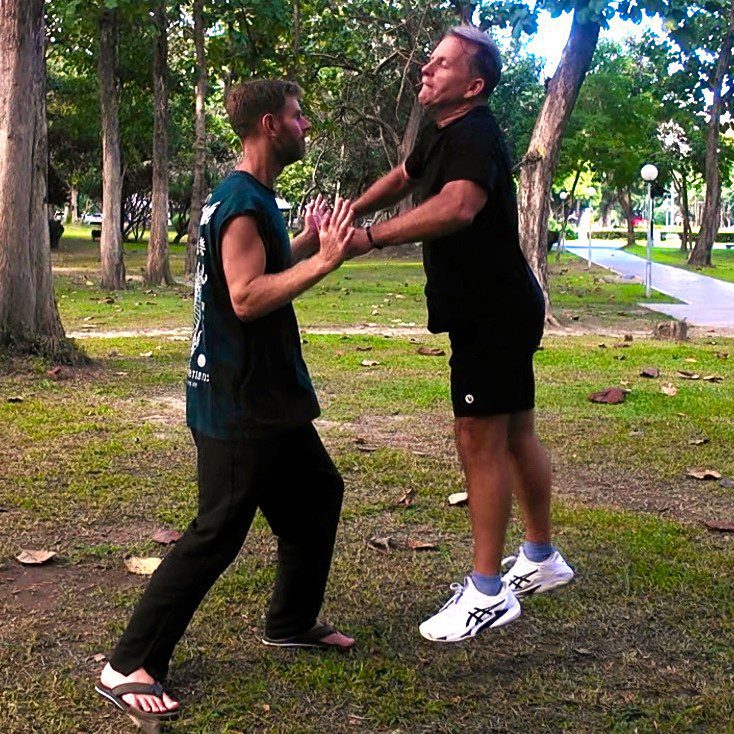
Strength, elastic power and mobility through Kung Fu-inspired exercises and fascia training.
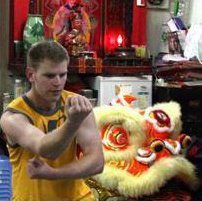
Explosive, coiled power combining rapid movement, precision, balance, and spirit.
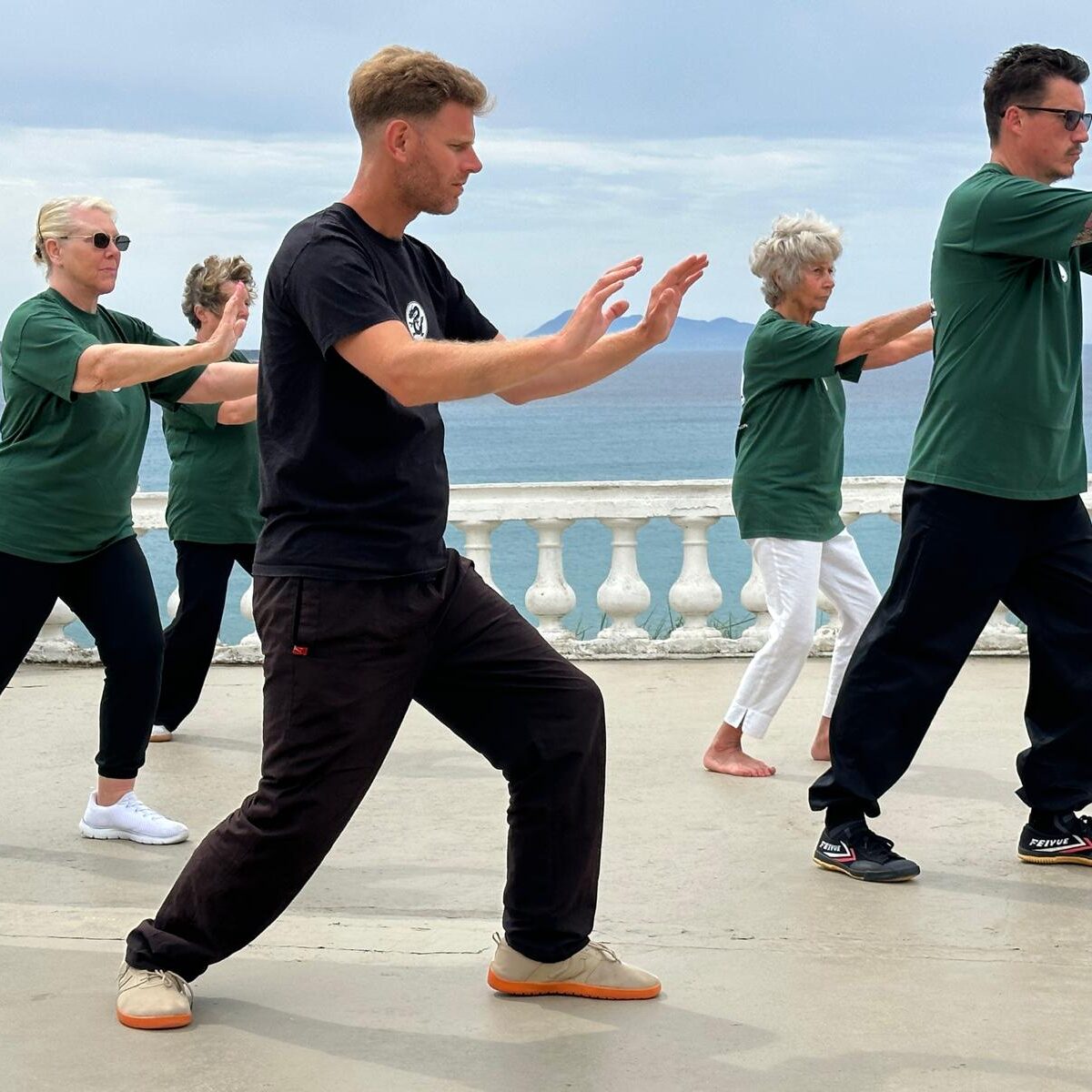
Transform tension into strength through mindful, powerful, and effortless movement.

Internal spiralling energy to build vitality and awaken deep internal power.

Cultivate awareness, balance elements, and expand consciousness through stillness.
Begin your journey today
The path to alignment starts with one class. Discover your energy, refine your awareness, and awaken your potential.