What is the difference between qigong and tai chi?
One of the most common questions people search for is the difference between Qigong and Tai Chi. Although the movements can look similar, the purpose, application, and outcome change depending on what you’re training, and knowing what you want to train will completely transform the way you practice.
Both systems work with Qi (energy), but they do so in different ways. Understanding this is the key to progressing beyond surface-level relaxation and gentle body movements into genuine internal development.

What Is Qigong?
Qigong translates as energy work. It’s an umbrella term for any method that trains sensitivity, regulation, and connection to universal energy (Qi or Chi).
Some styles of Qigong focus purely on the physical body, improving balance, flexibility, and breath control. But the more beneficial systems go much further.
Their purpose is to:
- develop awareness of internal energy,
- circulate and refine that energy,
- and apply it to improve life on many levels: health, emotional clarity, focus, and direction.
In classical training, Qigong works with the three bodies:
- the physical body (structure, bone density, fascia, etc),
- the astral or emotional body (identity, self-belief, reactive patterns),
- and the mental body (concentration, intention, consciousness).
In other words, Qigong is not defined by a movement style, but by how you align the 3 bodies and the elements within them. It’s the study of energy itself.
What Is Tai Chi?
Tai Chi is a martial art that uses the principles of Qigong.
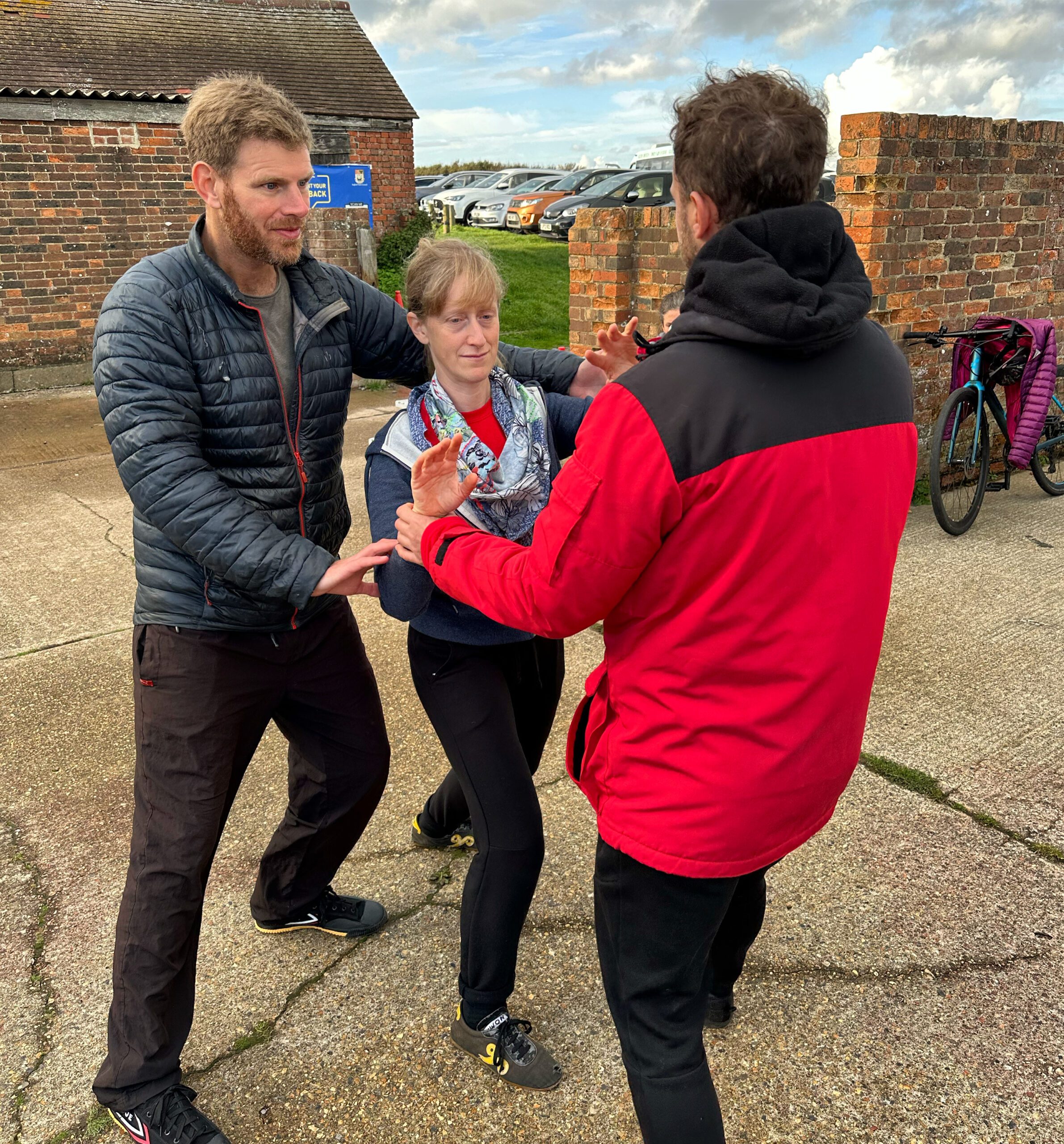
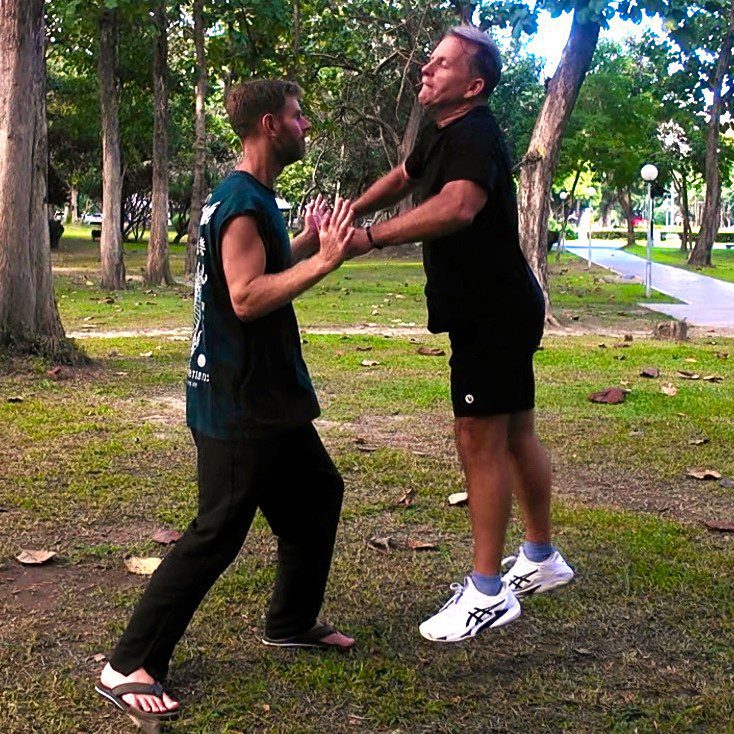
Every movement in Tai Chi is designed with a specific purpose, to neutralise force, disrupt balance, and issue power through relaxation rather than tension. The slow training is not for aesthetics; it’s to perfect the internal mechanics of the martial art. Once this is understood, Tai Chi is performed quickly.
So, when you’re doing Tai Chi, you’re doing Qigong, but not all Qigong is Tai Chi.
In Tai Chi you’re directing energy in a highly structured and precise way:
- Organising the body around the Dantian,
- Connecting the whole structure through the fascia,
- And, using intent to affect Chi and the other person without force.
As you do this, you naturally gain the same internal benefits, improved posture, better balance, clearer identity, and steadier focus, but the training method itself is specific, not general.
Qigong vs Tai Chi — The Key Difference
Think of it like this:
- Qigong is learning to feel, cultivate, and regulate energy.
- Tai Chi is learning to use that energy through a martial framework.
When you’re practising Qigong, you’re exploring energy directly.
When you’re practising Tai Chi, you’re applying those principles with direction and technique.
This is why the two arts can feel similar on the surface while producing very different outcomes over time.
Train With Me in Sussex — Build Real Internal Power
The easiest way to understand Qigong vs Tai Chi is not by reading — it’s by experiencing.
If you’re curious about the difference between Tai Chi and Qigong, try a class near me in Seaford and Hastings. You can try both in the same evening and notice how your body responds.
Many students are surprised by how different the internal feeling is, even when the movements look gentle.
Strength, elastic power and mobility through Kung Fu-inspired exercises and fascia training.
Explosive, coiled power combining rapid movement, precision, balance, and spirit.
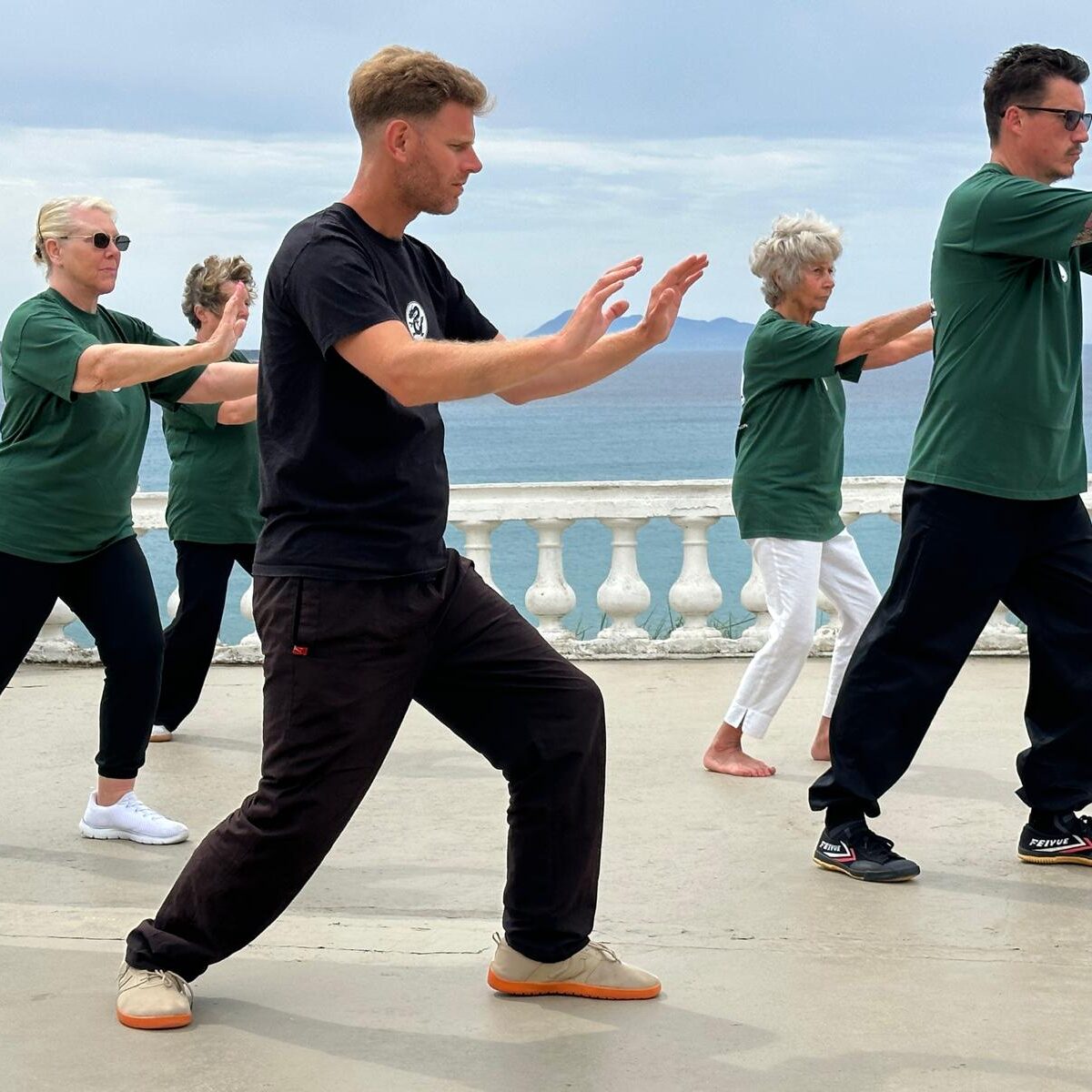
Transform tension into strength through mindful, powerful, and effortless movement.
Internal spiralling energy to build vitality and awaken deep internal power.

Cultivate awareness, balance elements, and expand consciousness through stillness.